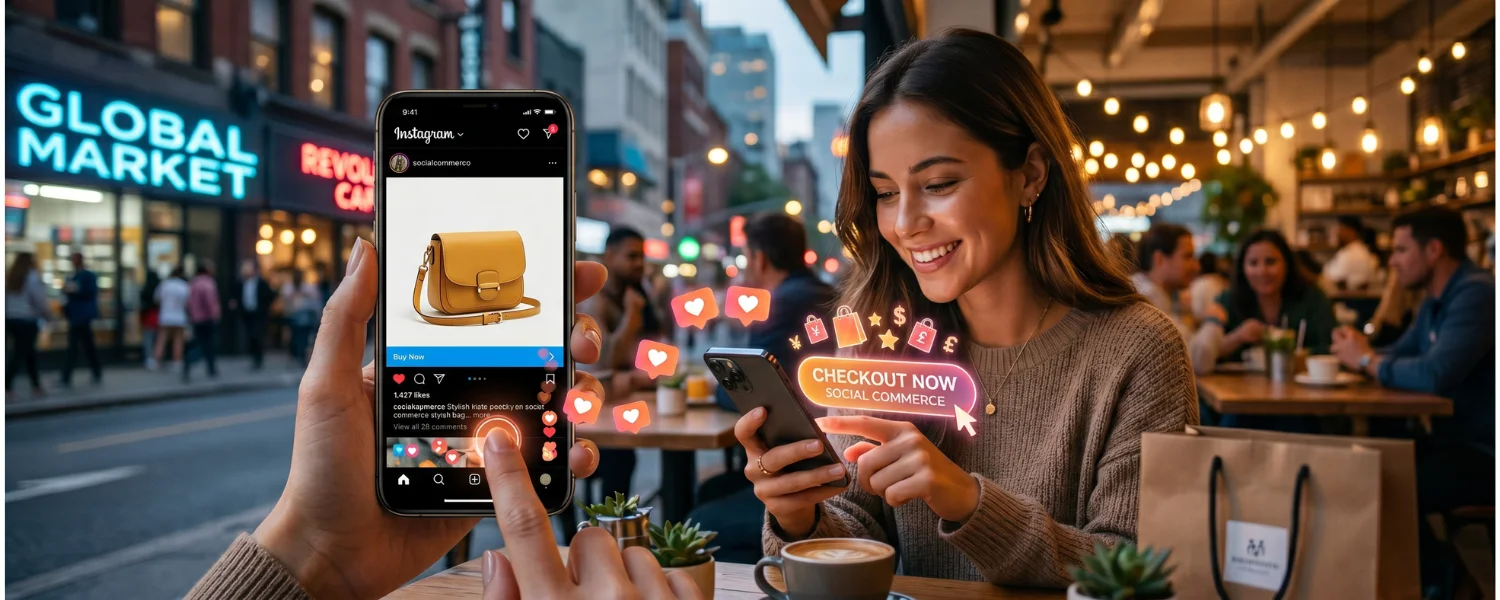
The Social Commerce Revolution: Turning Likes into Sales in 2026
Key Takeaways
- Social commerce in 2026 blends content, community, and checkout to create seamless on-platform buying journeys that routinely outperform off-platform clicks.
- Creators now influence the full funnel; pairing shoppable UGC, affiliate links, and whitelisted ads can lower acquisition costs and drive repeat purchases.
- A practical 10-step playbook shows how to audit your presence, build high-intent offers, optimize storefronts, and measure KPIs from view-through to lifetime value.
- Platform-native tactics for Instagram, TikTok, Pinterest, YouTube, Facebook, and WhatsApp help you match algorithms, formats, and in-app shopping tools.
- Transparent data practices, accessible design, fast fulfillment, and easy returns build trust that converts likes into long-term customer relationships.
Social commerce is no longer a novelty; it is the default way younger audiences discover and buy. As we enter 2026, the fusion of social media and e-commerce has shifted from trend to transformation. Social commerce is reshaping how businesses engage with customers, changing the traditional e-commerce model by meeting people where they already scroll, chat, and share. This guide explores the Social Commerce Revolution and shows how brands are now reliably turning likes into real revenue in 2026.
Grasping the Essence of Social Commerce
- Defining Social Commerce and Its Evolution Social commerce is the seamless merging of social media and e-commerce, enabling discovery, evaluation, and purchase to happen natively within social platforms. Its evolution traces back to the rise of creators who shape consumer behavior and to platforms that have matured from social networks into full marketplaces. Instagram, Facebook, TikTok, Pinterest, YouTube, and Snapchat now offer product tagging, in-app checkout, and native storefronts—turning attention into action with fewer clicks.
- Harnessing the Power of Social Proof Social proof is the engine of social commerce. When people see others endorsing a product—via likes, comments, saves, shares, ratings, or real customer videos—they are more likely to buy. The simple “like” has become a signal in a trust system that also includes creator endorsements, user-generated content (UGC), and transparent reviews. Brands that curate authentic proof and make it shoppable turn passive engagement into confident purchases.
- The Pivotal Role of Influencers
- Influencer Marketing 2.0 In 2026, influencer marketing extends far beyond one-off paid posts. Brands co-create interactive shopping experiences, equip creators with unique promo codes and affiliate links, and enlist them as long-term partners who influence the entire customer journey—from awareness to conversion to loyalty. With creator marketplaces, performance-based payouts, and ad “whitelisting,” influencers now operate as efficient sales channels as well as storytellers.
- Shoppable Content Shoppable content is the linchpin of modern social commerce. Today's platforms let people purchase directly from posts, Stories, Reels, Shorts, Pins, and live videos. From fashion hauls and GRWM clips to unboxings and how-tos, viewers can tap product tags, check out without leaving the app, and share purchases with friends—creating a loop of engagement that compounds reach and revenue.
- Platforms Taking the Lead
- Instagram: The Social Marketplace Instagram remains a leader with Shops, product tagging across formats, and in-app checkout. Its visual-first design, searchability via hashtags and captions, and collaborative features (Collabs, Broadcast Channels, and Remixes) make it a natural storefront. Brands can blend glossy creative with raw UGC and creator content to inspire, inform, and convert, all in one feed.
- TikTok: From Trends to Transactions TikTok shifts cultural trends into shopping behavior through algorithmic discovery. With TikTok Shop, native product anchors, and live shopping, brands can turn educational or entertaining short videos into direct sales. The platform's “community first” ethos rewards authenticity and frequent iteration, so practical demos, comparisons, and creator reactions often outperform polished ads.
- Facebook and Marketplace Facebook offers massive reach, robust groups, and Marketplace for local or secondhand demand. Shops, Catalogs, and dynamic ad formats help catalog-heavy brands retarget high-intent browsers. Community groups and interest-based forums are powerful for nurturing trust, collecting feedback, and accelerating word-of-mouth sales.
- Pinterest and YouTube Pinterest captures high-intent planners who are closer to purchase; product Pins, Collections, and visual search make it ideal for home, fashion, food, and lifestyle. YouTube Shopping brings product tagging to long-form, Shorts, and livestreams—perfect for deep reviews and tutorial-driven conversions with durable search value.
- WhatsApp and Messaging Commerce Conversational commerce flourishes in messaging. With catalogs, order updates, and secure payments, WhatsApp and Messenger let shoppers ask questions, receive tailored recommendations, and check out in-chat. This is especially strong for service-led brands, replenishment products, and markets where messaging is the default digital behavior.
- The Personalization Paradigm
- Data-Driven Personalization In 2026, social commerce emphasizes tailored experiences, not just product lists. Signals from social interactions help refine recommendations, bundles, and offers. Because data privacy expectations are high, brands pair consent-driven data collection with first-party audiences, clean catalog feeds, server-side tracking, and privacy-safe modeling—delivering relevance without sacrificing trust.
- Conversational Commerce Chatbots and direct messaging bridge the gap between browsing and buying. Smart assistants answer questions, size and fit checkers reduce returns, and human agents step in for nuanced needs. This real-time support blends the warmth of in-store service with the convenience of online shopping, strengthening community and driving higher lifetime value.
- From Likes to Sales: A Practical 10-Step Playbook for 2026
- Audit your social storefronts and signals. Ensure profiles are complete, brand-safe, and searchable. Connect product catalogs, enable in-app checkout where available, and verify that product tags, price, stock status, and shipping info are accurate.
- Define high-intent audiences and offers. Map key customer jobs-to-be-done and pain points. Build entry offers (starter bundles, limited drops, try-before-you-buy, or subscription trials) designed for quick mobile decisions.
- Build shoppable content pillars. Mix formats: 1) education/how-to, 2) social proof/UGC, 3) product demo/comparison, 4) lifestyle/aspiration, 5) live shopping. Tag products consistently and keep captions search-friendly.
- Activate creators across tiers. Combine nano and micro creators for efficient reach with mid-tier partners for storytelling. Use clear briefs, creative freedom, affiliate links, unique codes, and usage rights for paid amplification.
- Optimize for social SEO. Include natural keywords in on-screen text, captions, and alt text. Use descriptive filenames for product assets and ensure your Shop categories mirror how people actually search.
- Streamline checkout and policies. Offer fast, transparent shipping, clear taxes, and one-tap wallets. Publish simple return and exchange policies; pin them to highlights and product detail pages to reduce friction.
- Run full-funnel paid with creative testing. Pair creator whitelisting with dynamic product ads. Test hooks, angles, and CTAs weekly. Use view-through and click-through attribution, and model assisted conversions to see true impact.
- Leverage messaging for conversion and care. Add “Message to buy,” auto-replies for FAQs, and human handoff for complex cases. Send opt-in back-in-stock alerts, care tips, and reorder nudges to boost retention.
- Operationalize UGC and reviews. Request post-purchase content, repurpose it in Shops, and tag products in customer videos. Respond to reviews publicly and resolve issues quickly to strengthen credibility.
- Measure what matters and iterate. Track content view-through rate, product tag taps, add-to-carts, checkout starts, conversion rate, average order value, CAC, and LTV. Review by format, creator, and audience segment; double down on winners.
Overcoming Challenges
- Addressing Privacy Concerns As social commerce weaves into daily life, privacy is paramount. Balance personalization with respect for user choice by making data practices transparent, securing transactions, and obtaining clear consent for tracking and messaging. Offer granular controls and honor preferences across devices to maintain long-term trust.
- Staying Abreast of Technological Advances Rapid innovation brings both opportunity and complexity. Stay nimble with augmented reality try-ons, virtual showrooms, and AI-driven recommendations. Use AI to enrich product catalogs, summarize reviews, and generate variations of creative—always with human oversight, accessibility checks, and brand safety controls.
- Build Trust Beyond the Transaction Likes turn into sales when buyers feel confident. Set expectations with honest creative, accurate sizing and color representation, and clear benefit claims. Back it up with fast fulfillment, proactive order updates, and easy returns. Design for accessibility—legible text, captions, alt text, and motion-sensitive options—so every shopper can succeed. Ethical sourcing and sustainability details can further differentiate your brand for values-led consumers.
The Future Landscape of Social Commerce
- Beyond Transactions: Fostering Communities Social commerce will keep moving from transactional feeds to enduring communities. Brands that cultivate spaces for customers—private groups, membership tiers, exclusive drops, co-creation opportunities, and UGC spotlights—turn buyers into advocates. Community feedback loops improve products and lower acquisition costs over time.
- Integration with Augmented Reality AR connects the digital and physical by letting shoppers visualize fit, scale, shade, or placement at home. Virtual try-ons, 3D product models, and size-recommendation tools reduce uncertainty and returns while increasing buyer satisfaction—key advantages for categories like beauty, footwear, eyewear, furniture, and home decor.
Conclusion
As we progress through the social commerce revolution in 2026, turning likes into sales is not a fad but a structural shift in how people discover, evaluate, and buy. With creators, personalization, and platform-native shopping working in concert, the brands that lean into user experience and authentic connection will lead the digital marketplace. The journey from like to purchase is more than a transaction—it is a community-driven reimagining of commerce.